
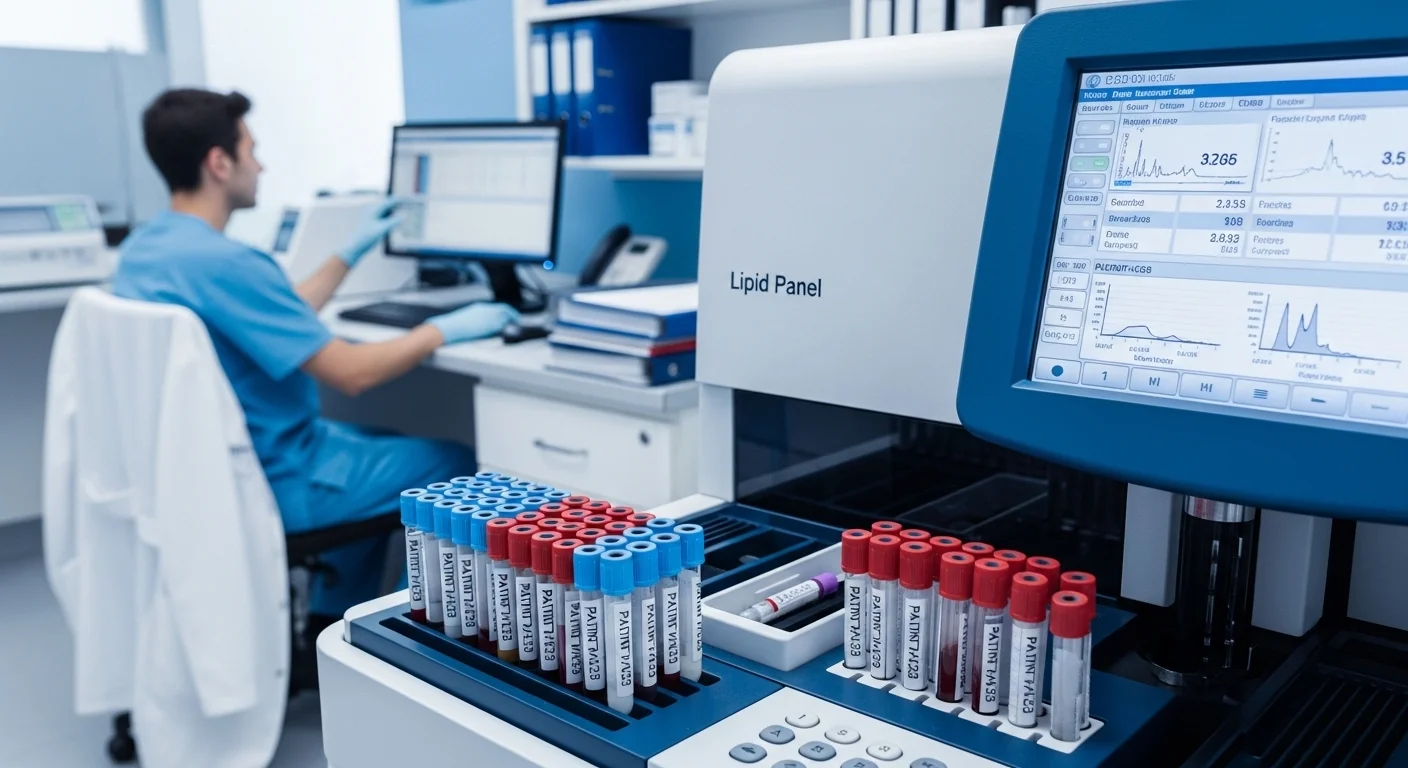
The CPT code for a lipid panel is 80061. This code represents a bundled laboratory test used to measure key cholesterol components, including total cholesterol, HDL, LDL, and triglycerides, for cardiovascular risk assessment.
Whether you’re a medical biller, coder, healthcare provider, or student, understanding how to correctly bill CPT 80061 is essential. Incorrect coding, missing documentation, or improper ICD-10 pairing can quickly lead to claim denials and revenue loss.
In this complete 2026 billing guide, you’ll learn:
- What CPT 80061 includes
- Which ICD-10 codes support medical necessity
- Medicare coverage rules and frequency limits
- Fasting and reflex testing (CPT 83721)
- Billing modifiers, denial prevention, and payer-specific tips
What is CPT Code 80061 for a Lipid Panel?
CPT 80061 is an organ or disease-oriented panel defined under the Current Procedural Terminology (CPT) system. It is used when a laboratory performs a complete lipid panel test on a single date of service.
When to Use CPT 80061
Use this code when all four components are tested together:
- Total cholesterol
- HDL cholesterol
- LDL cholesterol (calculated or direct)
- Triglycerides
When NOT to Use CPT 80061
Do not use 80061 if:
- Only one or two lipid components are tested
- Tests are performed on different dates
- The panel is incomplete
In such cases, individual CPT codes must be billed separately.
Real-World Scenario
If a physician orders a routine cholesterol screening panel, and the lab reports all four values, CPT 80061 is billed as a single bundled service, not four separate codes.
What Does a Lipid Panel Include? (Components & CPT Codes)
Core Components of a Lipid Panel
A standard lipid panel evaluates four essential biomarkers:
- Total Cholesterol – Overall cholesterol level in blood
- HDL (High-Density Lipoprotein) – “Good” cholesterol
- LDL (Low-Density Lipoprotein) – “Bad” cholesterol
- Triglycerides – Type of fat linked to heart disease
These markers help providers assess atherosclerosis risk, metabolic syndrome, and cardiovascular disease.
Individual CPT Codes (Unbundled Billing)
If the full panel is not performed, use these individual codes:
- 82465 – Total cholesterol
- 83718 – HDL cholesterol
- 84478 – Triglycerides
- 83721 – Direct LDL cholesterol
Why CPT 80061 is a Bundled Code
CPT 80061 is considered a bundled panel code under NCCI (National Correct Coding Initiative) rules.
This means:
- You cannot bill 80061 with its component codes on the same date
- Doing so results in unbundling errors and claim denials
Example of Incorrect Billing
Billing:
- 80061 + 82465 + 83718 + 84478
This violates NCCI edits and will likely be denied.
ICD-10 Codes to Use with CPT 80061 (Medical Necessity)
Accurate ICD-10 diagnosis coding is critical to justify medical necessity and secure reimbursement.
Common ICD-10 Codes
- E78.5 – Hyperlipidemia, unspecified
- E78.0 – Pure hypercholesterolemia
- E78.1 – Hypertriglyceridemia
- E78.2 – Mixed hyperlipidemia
- E78.01 – Familial hypercholesterolemia
Screening vs Diagnostic Codes
- Z13.6 – Encounter for cardiovascular screening
- Z13.220 – Screening for lipoid disorders
Important:
- These are preventive codes
- Coverage depends on payer policy (especially Medicare)
Documentation Requirements
To avoid denials:
- Clearly document symptoms or diagnosis
- Link CPT 80061 to appropriate ICD-10 codes
- Avoid overusing E78.5 without specificity
Payers prefer specific diagnoses over generic ones.
Medicare Coverage & Frequency Rules for Lipid Panel
Does Medicare Cover CPT 80061?
Yes, but with conditions.
- Covered under Medicare Part B when medically necessary
- Not always covered for routine screening
Frequency Limits
- Typically covered once every 12 months
- More frequent testing allowed if:
- Patient has diagnosed lipid disorder
- Monitoring statin therapy
Screening vs Diagnostic Coverage
- Diagnostic testing → Covered
- Routine screening (asymptomatic patients) → Often NOT covered
Advance Beneficiary Notice (ABN)
If the test may not be covered:
- Provide ABN before testing
- Protects provider from financial liability
Fasting Requirements & Reflex to Direct LDL (CPT 83721)
Is Fasting Required?
Traditionally:
- 9–12 hours fasting recommended
However:
- Non-fasting lipid panels are now accepted in many cases
- Fasting still required when:
- Triglycerides are elevated
- Precise LDL calculation is needed
What is Reflex Testing?
Reflex testing occurs when additional tests are automatically performed based on initial results.
When is CPT 83721 Used?
If:
- Triglycerides > 400 mg/dL
Then:
- LDL cannot be calculated
- Lab performs Direct LDL test (CPT 83721)
Billing for Reflex Testing
- CPT 83721 can be billed in addition to 80061
- Must be:
- Medically necessary
- Properly documented
Billing Modifiers, Common Denials & How to Avoid Them
Important Modifiers
- Modifier 91 – Repeat lab test
- Modifier QW – CLIA-waived test
- Modifier 90 – Reference (outside) lab
Common Claim Denials
- Missing medical necessity
- Incorrect ICD-10 code
- Unbundling errors
- Frequency limit exceeded
- Missing documentation
Denial Prevention Tips
- Always verify payer guidelines
- Use specific ICD-10 codes
- Avoid duplicate billing
- Document:
- Symptoms
- Diagnosis
- Physician orders
Strong documentation = faster reimbursement
Lipid Panel CPT Code at LabCorp, Quest & In-House Labs
LabCorp & Quest Diagnostics
- Use CPT 80061 for standard panels
- Reflex testing rules may vary slightly
- Always check payer contracts
In-House Lab Billing
- Requires CLIA certification
- May require:
- Modifier QW
- Proper lab documentation
Key Tip
Billing rules can differ by:
- Payer
- Location
- Lab setup
Fasting vs Screening vs Preventive Lipid Panel Billing
Understanding the difference is crucial:
| Type | CPT Code | ICD-10 | Coverage |
| Diagnostic | 80061 | E78.x | Covered |
| Screening | 80061 | Z13.6 | Limited |
| Preventive | 80061 | Z13.220 | Payer-dependent |
Has CPT Code 80061 Changed? (2016–2026 Update)
Good news:
CPT 80061 has remained unchanged from 2016 to 2026
This consistency makes it:
- Reliable
- Standardized
- Widely accepted across payers
CPT 80061 vs Individual Component Codes
When to Use CPT 80061
- Full lipid panel performed
- All components included
When to Use Individual Codes
- Partial testing only
- Specific biomarker requested
Quick Comparison
| Scenario | Code to Use |
| Full panel | 80061 |
| Only cholesterol | 82465 |
| Only HDL | 83718 |
| Only triglycerides | 84478 |
| Direct LDL needed | 83721 |
Conclusion
The lipid panel CPT code 80061 is a foundational billing code used across healthcare settings for cardiovascular risk evaluation. However, proper use requires more than just knowing the code—it demands:
- Correct ICD-10 pairing
- Awareness of Medicare rules
- Understanding bundling and modifiers
- Strong documentation practices
By applying these best practices, you can:
- Reduce claim denials
- Improve reimbursement rates
- Ensure compliance