
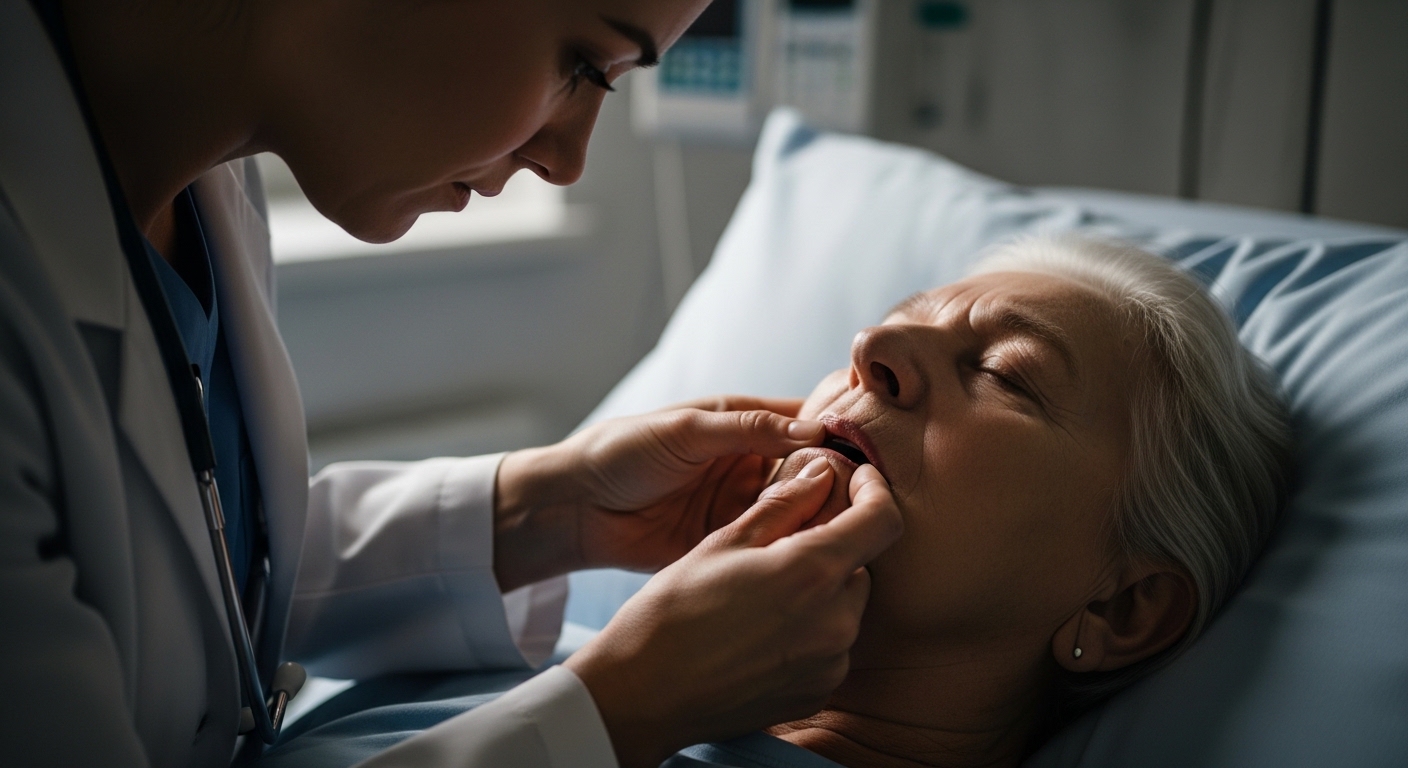
As individuals near the end of their lives, they experience physical changes that accompany the dying process. One common occurrence is jaw-dropping, which can result in an open-mouthed appearance. This blog post will explore why this happens, examining the physiological, neurological, and musculoskeletal factors that contribute to jaw dropping during the dying process.
Muscular Relaxation
- Muscle Weakness: As the body’s systems shut down, muscle weakness becomes more noticeable. This affects the face and jaw muscles, causing slackness and an open mouth.
- Loss of Motor Control: In the final stages of life, individuals often lose motor control and coordination. This may lead to involuntary movements, including jaw dropping.
Respiratory Changes
- Irregular Breathing Patterns: As the respiratory system fails, breathing patterns become irregular. Shallow, labored breathing or periods of apnea can alter facial expression, leading to a dropped jaw.
- Decreased Airway Patency: In some cases, jaw dropping may occur due to a blocked airway. The open mouth can help with airflow, easing breathing in individuals with compromised respiratory function.
Neurological Factors
- Neuromuscular Dysfunction: Neuromuscular dysfunction, caused by illness or the dying process, may lead to jaw dropping. Nerve dysfunction can affect facial muscle control and coordination.
- Brainstem Function: The brainstem controls essential functions like breathing and muscle tone. As the body nears death, changes in brainstem function can impact facial muscle control, leading to a dropped jaw.
Positioning and Posture
- Supine Position: Dying individuals are often positioned on their backs to promote comfort and ease breathing. Gravity may contribute to jaw dropping, especially if muscle tone is weak.
- Loss of Consciousness: As consciousness fades, control over facial muscles is lost. This relaxation can cause the jaw muscles to relax, leading to a dropped jaw.
You may also read: Mouth Open at Death: Symbolism and Physiology
Psychological and Emotional Factors
- Relaxation Response: In some cases, jaw dropping may reflect the body’s natural response to the dying process. As death approaches, the body may physically surrender, showing in the posture.
- End-of-Life Gestures: Jaw-dropping, along with other physical changes like closing the eyes or relaxing the limbs, may symbolize the transition from life to death. Caregivers and loved ones often observe these gestures in the final moments.
Providing Comfort and Support
- Maintaining Dignity: Caregivers should aim to protect the individual’s dignity by gently supporting the head and jaw when necessary. A small pillow or rolled towel under the head can provide comfort and prevent discomfort.
- Addressing Respiratory Needs: Meeting the individual’s respiratory needs is vital for comfort and ease of breathing. This may involve repositioning to aid airflow or providing supplemental oxygen if needed.
Conclusion
Jaw dropping in dying individuals is a complex phenomenon influenced by physiological, neurological, and musculoskeletal factors. As the body nears death, muscle weakness, respiratory changes, neurological dysfunction, and positioning all contribute to jaw dropping. Recognizing and understanding this process helps caregivers provide comfort and support during the final moments. By maintaining dignity, addressing respiratory needs, and providing coordinated care, caregivers can ensure a peaceful and comfortable transition for the individual.