
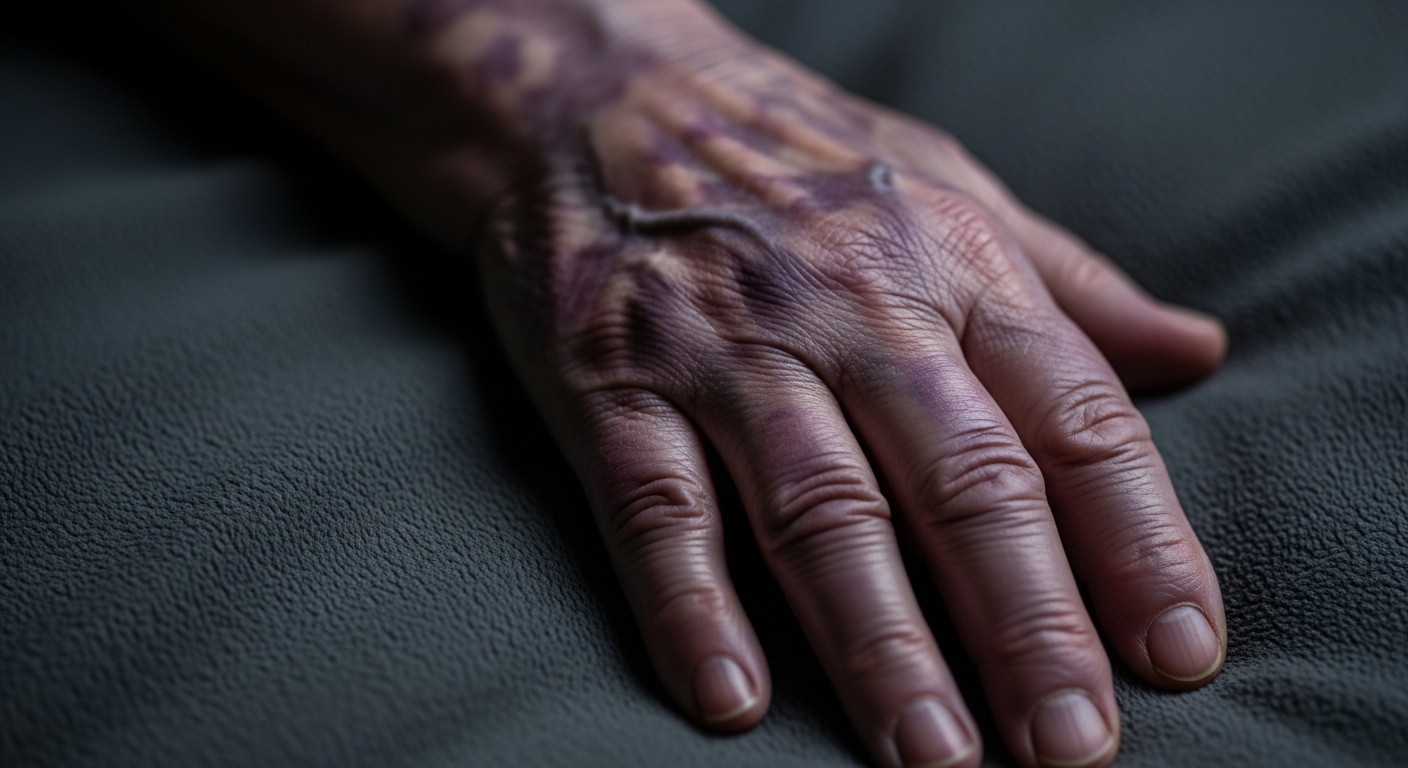
Mottling Before Death: Signs and Symptoms is an important topic for families, caregivers, and healthcare providers. Mottling appears as marbled or blotchy skin, usually on the hands, feet, arms, and legs, in individuals nearing the end of life. Recognizing these signs helps loved ones understand the body’s natural changes and provide comfort during this sensitive time. This article explains the causes, signs, and care strategies for mottling before death.
What is Mottling?
Mottling occurs when the skin develops a patchy, purplish-blue appearance. This usually affects the extremities. The condition happens because blood flow to the skin decreases and blood pools in small vessels. Families often notice these changes first on the hands and feet.
Mottling is not a disease. Instead, it reflects the body’s natural process as it prioritizes essential organs like the heart, lungs, and brain. While seeing mottling can be alarming, understanding it can help caregivers provide proper care and maintain dignity.
Signs and Symptoms of Mottling Before Death
The most common signs and symptoms of mottling before death include:
- Discolored skin: marbled purple or bluish patches on hands, feet, arms, or legs
- Cool skin: affected areas may feel colder than the rest of the body
- Reduced urine output: kidneys slow down as the body prepares for the final stages
- Decreased consciousness: the individual may become less responsive
- Weak pulse in extremities: circulation slows in non-essential areas
Recognizing these symptoms early helps caregivers focus on comfort measures. It also allows families to emotionally prepare for the final stage of life.
Why Mottling Happens: Physiological Causes
Mottling Before Death: Signs and Symptoms occurs because the body redirects blood to vital organs. The heart, lungs, and brain receive priority, while the skin and extremities receive less blood. Blood vessels in the hands, feet, and legs constrict, causing blotchy or marbled skin.
This process is a natural response as the body shuts down. While mottling signals a critical stage, it does not cause pain. Instead, the appearance of mottling serves as a visual indicator that death may be approaching within hours or days.
Prognostic Significance of Mottling
Mottling acts as a prognostic indicator in end-of-life care. Caregivers often use it to gauge how close death may be. Although not every individual shows mottling, when it appears, it usually signals the final stage of life.
Understanding its significance helps families:
- Prepare emotionally
- Arrange hospice or palliative care
- Focus on comfort rather than unnecessary interventions
Mottling also alerts healthcare providers to monitor vital signs and prioritize the patient’s comfort and dignity.
Palliative Care for Individuals with Mottling
Care strategies for those experiencing mottling focus on comfort and compassion. Recommended approaches include:
- Keeping the patient warm: Use blankets and ensure the room temperature is comfortable
- Elevating extremities: Supports circulation and reduces discomfort
- Gentle massage: Lightly massaging or moisturizing affected areas improves comfort
- Emotional support: Provide reassurance and presence for both patient and family
These measures do not reverse mottling, but they reduce discomfort and help maintain dignity in the final days.
Emotional Support for Families
Seeing mottling can be emotionally challenging. Families may feel anxious, helpless, or frightened. Educating them about Mottling Before Death: Signs and Symptoms can reduce fear.
Support strategies include:
- Explaining that mottling is a normal part of dying
- Encouraging families to hold the patient’s hand or speak softly
- Involving palliative care teams to answer questions and provide guidance
These actions help create a calm environment, allowing patients to experience a peaceful final stage.
Common Questions About Mottling Before Death
Q1: Does mottling hurt the patient?
No. Mottling reflects changes in circulation and does not cause pain. Comfort measures are the primary focus.
Q2: How long before death does mottling appear?
It varies. Mottling can appear hours to a few days before death. Its presence often indicates the final stage of life.
Q3: Can anything reverse mottling?
No. Mottling is a natural physiological process. Care focuses on comfort, warmth, and emotional support.
Q4: Should we be worried if mottling is present?
While mottling signals the body is shutting down, it does not require medical intervention. Families should focus on supportive care and dignity.
How to Provide Compassionate End-of-Life Care
Beyond physical comfort, end-of-life care includes emotional and spiritual support. Caregivers can:
- Speak calmly and reassure the patient
- Allow quiet time with family
- Offer favorite music or soft lighting
- Ensure the patient’s basic needs like hydration and hygiene are met
Recognizing Mottling Before Death: Signs and Symptoms ensures caregivers focus on holistic care, addressing both physical comfort and emotional well-being.
Conclusion
Mottling Before Death: Signs and Symptoms is a natural, visible sign of the body’s final stages. It usually appears on the extremities as marbled or blotchy skin due to reduced blood flow.
Understanding mottling helps families and caregivers prepare emotionally, provide comfort-focused care, and maintain dignity for the patient. While it can be unsettling, recognizing these signs allows loved ones to focus on peaceful, compassionate end-of-life care.