
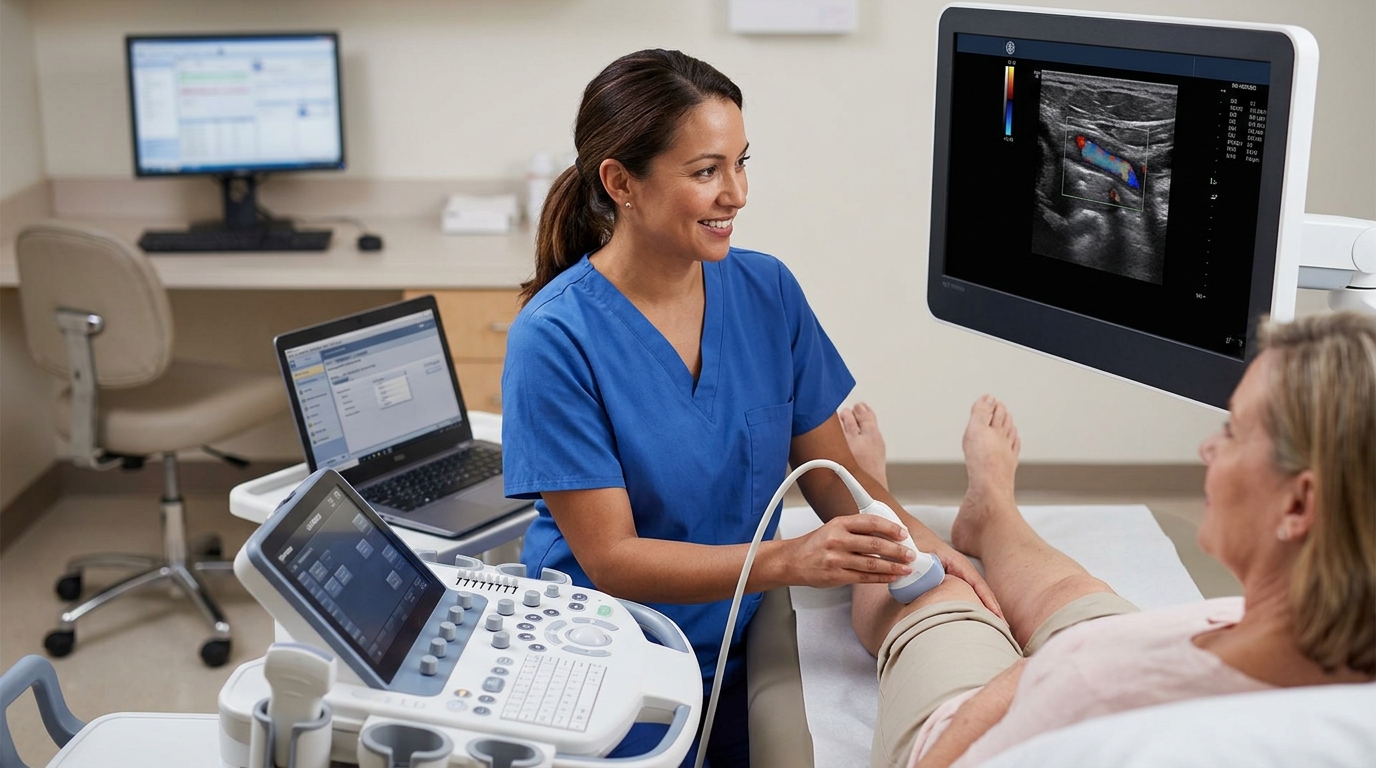
Accurate CPT coding forms the backbone of healthcare reimbursement. Every time a physician performs a procedure, medical billers and coders must assign the correct Current Procedural Terminology (CPT) code to ensure that insurance carriers process claims properly and providers receive appropriate payment. Even a single coding error can trigger a claim denial, delay revenue, or expose a practice to compliance risks.
One procedure code that frequently causes confusion in vascular imaging billing is CPT code 93976. Understanding the full CPT code 93976 description is essential for medical billers, coders, and healthcare providers who want to submit clean claims, avoid costly denials, and stay compliant with payer guidelines. This comprehensive guide breaks down everything you need to know about CPT code 93976, from its clinical definition to billing best practices, so your team can code with confidence and maximize reimbursement.
What is CPT Code 93976?
Basic Definition of CPT Code 93976
CPT code 93976 belongs to the vascular ultrasound and duplex scanning family of diagnostic imaging codes. Specifically, it describes a duplex scan of arterial inflow and venous outflow for abdominal, pelvic, scrotal, or retroperitoneal organs. The key distinguishing feature of this code is that it represents a limited study, meaning the examination evaluates specific areas or vessels rather than completing a comprehensive bilateral assessment.
Medical billers frequently encounter CPT 93976 in radiology and vascular lab settings. Understanding that this is a limited, not complete, duplex scan is critical because it directly affects which code applies and how payers reimburse the service.
Medical Purpose of CPT Code 93976
Physicians and vascular specialists order this study for several important diagnostic reasons. When a patient presents with symptoms such as abdominal pain, pelvic congestion, suspected portal hypertension, renal artery stenosis, or unexplained lower extremity swelling, clinicians need real-time imaging to evaluate vascular blood flow. CPT code 93976 allows providers to assess arterial and venous hemodynamics using Doppler ultrasound technology without requiring a full bilateral study.
Common clinical indications for ordering this procedure include:
- Renal artery stenosis evaluation in hypertensive patients
- Portal vein assessment in patients with suspected liver disease
- Pelvic vascular evaluation for suspected pelvic congestion syndrome
- Scrotal vascular flow assessment for varicocele or torsion workup
- Retroperitoneal vessel monitoring post-surgical or post-intervention
Because it provides clinicians with actionable hemodynamic data, this procedure plays a meaningful role in guiding treatment decisions and monitoring disease progression.
Importance in Medical Coding Systems
Within the CPT classification system, code 93976 falls under the Medicine section, specifically in the Noninvasive Vascular Diagnostic Studies subsection (CPT codes 93880–93998). The American Medical Association (AMA) maintains these codes, and the Centers for Medicare & Medicaid Services (CMS) assigns relative value units (RVUs) that determine payment levels.
Both outpatient hospital facilities and freestanding radiology practices use CPT code 93976 when billing this limited vascular study. Insurance carriers require detailed documentation in the claim to support medical necessity, making proper code selection and thorough documentation equally important for successful reimbursement.
CPT Code 93976 Description Explained in Detail
Full CPT Code 93976 Description
The official CPT code 93976 description reads:
“Duplex scan of arterial inflow and venous outflow of abdominal, pelvic, scrotal, or retroperitoneal organs; limited study.”
Breaking this down further helps coders apply it correctly:
- Duplex scan refers to a combination of B-mode (grayscale) ultrasound imaging with Doppler flow assessment. This allows technologists to visualize vessel anatomy while simultaneously measuring blood flow velocities and direction.
- Arterial inflow and venous outflow indicates the study evaluates both the arterial supply entering the organ and the venous drainage leaving it.
- Abdominal, pelvic, scrotal, or retroperitoneal organs specifies the anatomical territory covered.
- Limited study is the defining qualifier, the examination does not encompass a complete bilateral review of all vessels in the region. Instead, it focuses on a targeted area or specific vascular territory.
This code includes the technical component of the duplex scan, Doppler waveform analysis, and the interpretation of results when billed globally. It excludes complete bilateral studies (which fall under CPT 93975) and separate evaluation of peripheral extremity vessels.
Organs and Areas Covered
Coders and clinicians must understand which anatomical structures CPT code 93976 appropriately covers:
- Abdominal vessels: Aorta, celiac axis, superior mesenteric artery, inferior mesenteric artery, renal arteries, and corresponding venous structures
- Pelvic vessels: Iliac arteries and veins, uterine arteries, ovarian veins
- Scrotal structures: Testicular artery and pampiniform venous plexus
- Retroperitoneal organs: Kidneys, adrenal glands, and surrounding vascular structures
The study assesses both the direction and velocity of blood flow, providing the interpreting physician with the data needed to identify stenosis, occlusion, thrombosis, or abnormal flow patterns.
When CPT 93976 is Used
Providers order and bill CPT 93976 in several distinct clinical scenarios:
- Initial diagnostic evaluation when symptoms suggest vascular pathology in the abdomen or pelvis
- Follow-up imaging after vascular intervention, such as stent placement or embolization
- Monitoring chronic vascular conditions, including portal hypertension or renal artery disease
- Pre-operative planning to map vascularity before surgical procedures
- Inconclusive findings from prior imaging that require targeted Doppler reassessment
Difference Between CPT 93975 and CPT 93976
Coders often confuse CPT 93975 and CPT 93976 because both describe duplex scans of the same anatomical regions. However, one critical distinction separates them:
| Feature | CPT 93975 | CPT 93976 |
| Scope | Complete study | Limited study |
| Coverage | Bilateral evaluation of all vessels | Targeted or unilateral assessment |
| Reimbursement | Higher RVU value | Lower RVU value |
| Documentation required | Full bilateral vascular assessment | Focused clinical indication |
Selecting CPT 93975 when only a limited study was performed constitutes upcoding, a compliance violation that can trigger audits, recoupments, and penalties. Conversely, billing CPT 93976 for a complete bilateral study means leaving reimbursement on the table. Therefore, coders must carefully review the radiology or vascular lab report to confirm the actual scope of the study performed before assigning either code.
Medical Necessity and Documentation Requirements
Why Medical Necessity Matters
Insurance carriers, including Medicare, Medicaid, and commercial payers, only reimburse procedures that meet established medical necessity criteria. Medical necessity means the procedure is appropriate, clinically indicated, and supported by evidence-based guidelines for the patient’s specific condition. Without clear medical necessity, payers deny the claim, regardless of how accurately the coder selected CPT 93976.
Establishing medical necessity upfront protects providers from denials and reduces the need for costly appeals. It also ensures compliance with payer contracts and CMS guidelines, which is especially important for practices participating in Medicare.
Required Documentation for CPT 93976
To support a claim for CPT code 93976, the medical record must contain:
- A signed physician order that clearly indicates the clinical reason for performing the duplex scan
- A detailed radiology or vascular lab report that describes the findings, methodology (duplex with Doppler), and the specific vessels examined
- Clinical documentation supporting the presenting symptoms, such as provider notes describing abdominal pain, hypertension resistant to treatment, or pelvic congestion symptoms
- Supporting ICD-10-CM diagnosis codes that link the procedure to a medically necessary indication (e.g., I70.1 for renal artery stenosis, I82.890 for chronic portal vein thrombosis)
- Attestation of medical necessity where required by specific payers
Every element of this documentation package must align consistently. Discrepancies between the order, the report, and the diagnosis codes raise red flags during payer review and increase denial risk.
Common Documentation Errors
Medical billers and coders frequently encounter these documentation failures when processing CPT 93976 claims:
- Missing or unsigned physician order: Some practices submit claims without verifying that a valid order exists in the record
- Vague radiology reports: Reports that describe findings without specifying which vessels were evaluated or whether the study was limited or complete
- Mismatched ICD-10 codes: Diagnosis codes that do not clinically justify the vascular study performed
- Absent clinical notes: Claims submitted without office notes or consultation records that explain why the physician ordered the imaging
- Failure to document laterality: For scrotal or pelvic studies, not specifying whether the evaluation was unilateral or bilateral can complicate code selection
Billing Guidelines for CPT Code 93976
Correct Coding Practices
Billing CPT code 93976 accurately requires a systematic workflow:
- Confirm the procedure performed: Review the radiology report to verify that a limited duplex scan of abdominal, pelvic, scrotal, or retroperitoneal vessels was performed
- Verify the scope: Ensure the report reflects a limited study, not a complete bilateral examination
- Select the correct ICD-10-CM code(s): Pair CPT 93976 with diagnosis codes that support the clinical indication
- Check for bundling issues: Review the CCI (Correct Coding Initiative) edits to confirm that CPT 93976 is not bundled with other codes billed on the same date of service
- Confirm the place of service: Billing rules differ between outpatient hospital settings and freestanding labs
- Apply any applicable modifiers: Add modifiers only when they are clinically appropriate and supported by documentation
Modifier Usage
Modifiers provide additional information about a service that distinguishes it from the standard code description. For CPT code 93976, coders may need to apply these modifiers in specific circumstances:
- Modifier 26 (Professional Component): Use when the physician provides only the interpretation and report, not the technical performance of the scan
- Modifier TC (Technical Component): Use when the facility provides the equipment and technologist, but the physician reads the study separately
- Modifier 59 (Distinct Procedural Service): Apply when CPT 93976 is performed alongside another procedure on the same day and represents a clearly separate and distinct service
- Modifier 76 (Repeat Procedure): Use when the same physician repeats the identical study on the same day for a clinically valid reason
Always document the clinical rationale for any modifier in the medical record before applying it to the claim.
Insurance Reimbursement Considerations
Reimbursement rates and coverage policies for CPT 93976 vary by payer:
- Medicare: CMS calculates payment based on RVUs assigned in the Medicare Physician Fee Schedule (MPFS). The rate differs between facility and non-facility settings.
- Medicaid: Each state sets its own Medicaid fee schedule, so reimbursement varies by jurisdiction.
- Commercial payers: Many private insurers follow Medicare rates with a contractual multiplier, but some maintain independent fee schedules.
- Pre-authorization: Certain payers require prior authorization for vascular ultrasound studies, particularly for non-urgent indications. Always verify authorization requirements before scheduling the procedure.
- Coverage limitations: Some payers limit the frequency of duplex scans within a given time period. Exceeding these limits without documentation of a new clinical indication typically triggers a denial.
Common Billing Mistakes and Denial Reasons
Incorrect Code Selection
The most frequent coding error associated with CPT code 93976 is confusion with neighboring codes. Coders sometimes select CPT 93975 (complete study) when the documentation clearly supports only a limited evaluation, or they choose peripheral vascular codes when the study focused on abdominal or pelvic vessels. Either mistake generates a denial or, worse, a compliance violation. Coders must read the full radiology report before assigning any CPT code in the 93975–93981 range.
Missing or Incomplete Documentation
Claims lacking adequate documentation fail at the payer review stage more often than almost any other reason. When a payer requests records to substantiate a CPT 93976 claim and the documentation does not support the service, the carrier denies or recoups the payment. Practices that do not establish a documentation checklist before billing create unnecessary exposure to this risk.
Lack of Medical Necessity
Even when coders select the correct CPT code and documentation appears complete, claims still deny when the diagnosis codes do not establish a medically necessary reason for the study. For example, billing CPT 93976 for a routine annual checkup without vascular symptoms provides no clinical justification. Payers automatically flag these claims because the diagnosis does not support the procedure.
Preventing Claim Denials
Proactively preventing denials saves time, reduces administrative burden, and improves cash flow. Practices should implement these strategies:
- Pre-claim documentation review: Verify that all required elements are present before submitting the claim
- Real-time eligibility verification: Confirm patient coverage and authorization requirements prior to the date of service
- Coding audits: Conduct regular internal audits of CPT 93976 claims to catch patterns of miscoding before they attract payer attention
- Denial tracking: Analyze denial reasons by code and payer to identify systemic issues in the billing workflow
- Timely appeals: When denials do occur, submit well-documented appeal letters promptly, well within the payer’s appeal window
Best Practices for Accurate CPT 93976 Coding
Follow AMA Coding Guidelines
The AMA updates the CPT manual annually, and code descriptions, guidelines, and parenthetical instructions can change from year to year. Coders must use the current edition of the CPT codebook when assigning CPT 93976 and verify any guideline updates that affect the vascular ultrasound section. Additionally, CMS releases its own coding guidelines through Local Coverage Determinations (LCDs) that supersede general CPT guidance for Medicare beneficiaries in specific jurisdictions.
Use Verified Documentation
Before submitting any claim for CPT code 93976, the billing team must match the procedure code to the actual content of the radiology or vascular lab report. The report should confirm that the study was a duplex scan (not a simple B-mode ultrasound), that it included Doppler flow assessment, that it evaluated abdominal, pelvic, scrotal, or retroperitoneal vessels, and that the examination was limited in scope. If the report does not clearly support these elements, coders should query the interpreting physician for clarification before billing.
Train Billing Staff Regularly
The complexity of vascular ultrasound coding demands ongoing education. Billing managers should schedule regular training sessions covering updates to the CPT vascular section, CCI edit changes affecting ultrasound codes, payer-specific coverage policies, and real-world denial case reviews. Cross-training front-desk and clinical staff on documentation requirements also reduces errors at the point of care, before records reach the billing team.
Use Professional Billing Services
Many healthcare providers find that outsourcing medical billing to a specialized revenue cycle management firm significantly reduces coding errors, claim denials, and compliance risks. Professional billing services bring dedicated coding expertise, up-to-date knowledge of payer rules, and robust denial management workflows that in-house teams often lack the bandwidth to maintain. For complex procedure codes like CPT 93976, where proper code selection directly impacts reimbursement, professional support delivers measurable financial and operational benefits.
How Right On Time Billing Services Can Help
Expert Medical Coding Support
Right On Time Billing Services provides specialized medical coding expertise for vascular and diagnostic imaging procedures, including CPT code 93976. Their certified coders understand the nuances of limited versus complete duplex scan coding, apply correct ICD-10-CM pairings, and review documentation thoroughly before every claim submission. This expertise translates directly into fewer coding errors and higher first-pass claim acceptance rates.
Denial Management Services
When payers deny claims, Right On Time Billing Services takes immediate action. Their denial management team analyzes each rejection, identifies the root cause, and submits detailed, well-documented appeals within payer deadlines. By tracking denial trends across codes and payers, they also implement proactive corrections that reduce future denials, protecting your revenue before claims are even submitted.
Revenue Cycle Optimization
Right On Time Billing Services optimizes the entire revenue cycle, from patient registration and eligibility verification through charge capture, claim submission, payment posting, and collections. For practices that perform vascular ultrasound studies, this end-to-end management ensures that every CPT 93976 claim moves through the cycle efficiently, reducing days in accounts receivable and improving cash flow.
Compliance Assurance
Compliance with HIPAA, CMS guidelines, and payer contracts is non-negotiable in today’s healthcare environment. Right On Time Billing Services builds compliance into every step of the billing process, from secure data handling to accurate code selection to proper modifier use. Their team stays current with regulatory changes so your practice never falls behind on evolving requirements.
Conclusion
Understanding the full CPT code 93976 description is not merely a technicality, it directly determines whether healthcare providers receive appropriate reimbursement for the vascular imaging services they deliver. From confirming that a limited duplex scan was performed to pairing the code with the right ICD-10 diagnosis, every detail in the billing process matters.
Accurate medical billing and coding for CPT 93976 requires coders and billers to master the code’s clinical definition, distinguish it correctly from CPT 93975, document medical necessity thoroughly, and follow payer-specific billing guidelines without exception. When practices get these elements right, they submit cleaner claims, collect faster, and reduce the administrative drain of denials and appeals.
If your team struggles with vascular ultrasound coding, documentation gaps, or rising denial rates, professional support makes a measurable difference. Right On Time Billing Services combines certified coding expertise with end-to-end revenue cycle management to help your practice capture every dollar it earns. Partnering with experienced billing professionals is one of the most effective steps a provider can take to improve financial performance while maintaining full compliance.
Frequently Asked Questions (FAQs)
Get clear and concise answers about our Medical Billing Services, including how we streamline claim submissions, reduce billing errors, accelerate reimbursements, and improve your practice’s cash flow. Learn how our solutions enhance revenue cycle management, ensure compliance, and support the financial growth of your healthcare practice.
CPT code 93976 is used for a duplex ultrasound study of abdominal or pelvic blood vessels that includes stress or provocative maneuvers. It helps physicians evaluate blood flow and detect vascular abnormalities for accurate diagnosis and treatment planning.
The CPT code 93976 description refers to a vascular ultrasound procedure that evaluates blood flow using Doppler imaging with additional stress or maneuver techniques. It is commonly used in radiology and vascular studies to assess circulation and detect blockages or abnormalities.
CPT 93976 includes additional stress or provocative maneuvers during the ultrasound, while CPT 93975 is performed without stress testing. The main difference lies in the complexity and technique used during the vascular examination.
Proper documentation includes a physician order, detailed ultrasound report, patient symptoms, and medical necessity justification. Clear documentation is essential to support insurance claims and avoid denials.
CPT code 93976 is important because it ensures accurate reporting of vascular ultrasound procedures. Correct usage helps healthcare providers receive proper reimbursement and reduces claim rejection risks from insurance companies.
Common errors include using the wrong CPT code, missing documentation, lack of medical necessity, and incorrect pairing with ICD-10 diagnosis codes. These mistakes often lead to claim denials or payment delays.
Yes, most insurance providers, including Medicare, cover CPT 93976 when it is medically necessary and properly documented. However, coverage may vary depending on payer policies and patient condition.
The procedure is usually performed by a trained ultrasound technician (sonographer) and interpreted by a radiologist or vascular specialist who reviews the imaging results for diagnosis.