
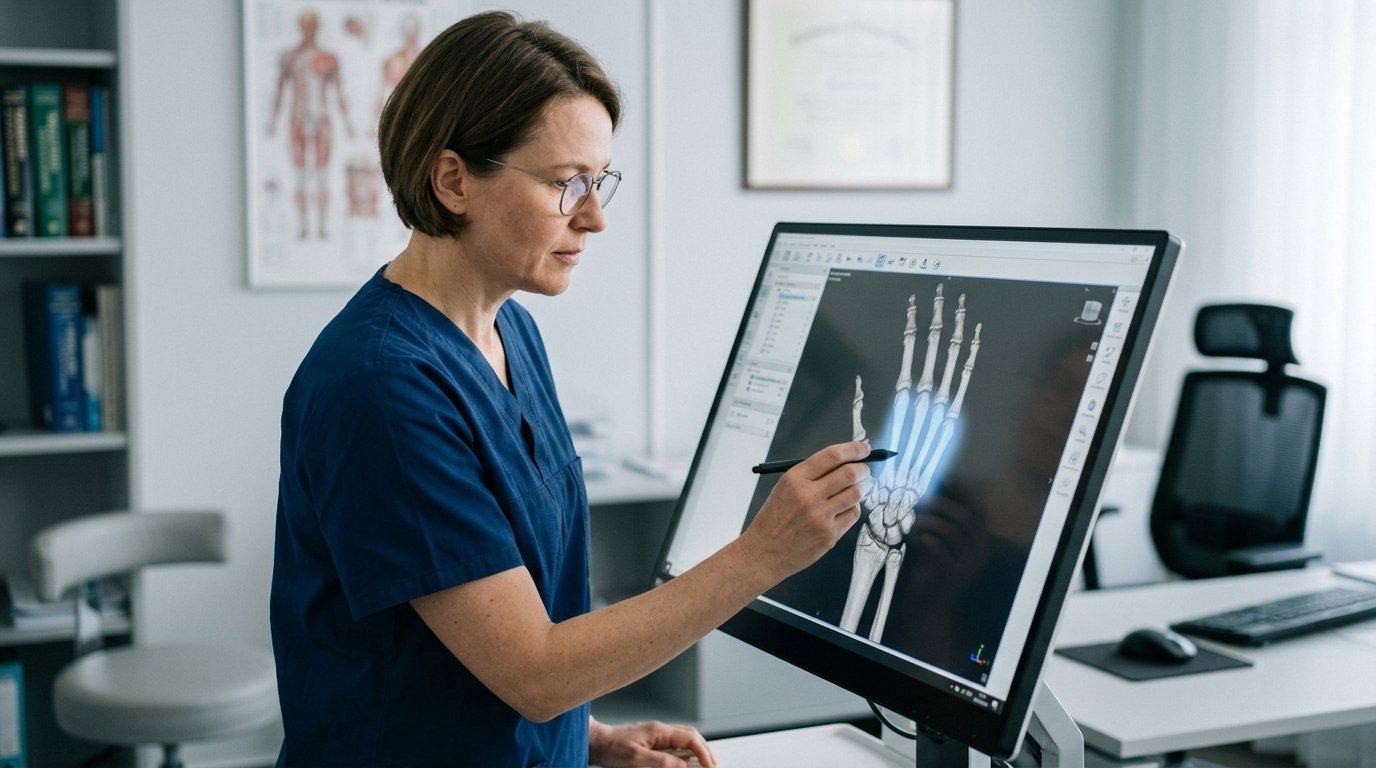
Metacarpal fractures represent some of the most common hand injuries seen in orthopedic practices today. Many of these injuries require surgical repair to restore hand function and structural integrity. Surgeons often perform Open Reduction Internal Fixation (ORIF) to stabilize these broken bones.
Accurate CPT coding for these surgical procedures is essential for proper medical reimbursement. However, selecting the correct ORIF metacarpal CPT code presents unique challenges for medical billers and coders. Code selection changes based on several key clinical factors:
- The total number of metacarpals treated during the surgery.
- The specific anatomical location of the fracture line.
- Whether the injury is classified as open or closed.
- Precise details documented within the surgeon’s operative report.
Mistakes in coding lead to claim denials, delayed payments, and compliance risks for your practice. Finding the exact CPT code for ORIF metacarpal fracture cases requires careful attention to surgical notes. Right On Time Billing Services helps orthopedic practices navigate these complex coding requirements. Our team ensures accurate claim submissions and maximizes revenue performance for every procedure.
Understanding ORIF for Metacarpal Fractures
What Is Open Reduction Internal Fixation (ORIF)?
Open Reduction Internal Fixation is a two-step surgical procedure used to repair broken bones. First, the surgeon performs an open reduction by making an incision to access the site. They manually manipulate the bone fragments back into their normal anatomical alignment.
Second, the surgeon applies internal fixation devices directly to the realigned bone. They use specialized hardware to hold the bone fragments securely together during healing:
- Metallic plates attached across the fracture site.
- Surgical screws placed to compress bone fragments.
- Smooth Kirschner wires (K-wires) for temporary or permanent pin fixation.
- Intramedullary rods or other specialized internal fixation devices.
Surgeons choose ORIF over conservative treatment when non-surgical methods fail to maintain stability. Casts or splints cannot hold severely displaced bone fragments in alignment. ORIF provides direct visual access and rigid internal hardware for faster, safer healing.
When Is ORIF Recommended for a Metacarpal Fracture?
Orthopedic surgeons recommend ORIF for specific metacarpal fractures based on injury severity:
- Displaced fractures: Bone fragments have shifted significantly out of normal alignment.
- Rotational deformity: The finger rotates abnormally, causing overlapping during hand closure.
- Multiple metacarpal fractures: Multiple broken bones destabilize the entire structural framework of the hand.
- Intra-articular fractures: The fracture line extends directly into the joint space.
- Unstable fractures: The bone fragments shift easily despite external immobilization attempts.
- Failed conservative treatment: Non-surgical casting failed to maintain proper bone alignment over time.
Proper diagnostic documentation clearly justifies the medical necessity of the ORIF procedure. Coders rely heavily on these clinical details to support submitted claims during billing.
What Is the CPT Code for ORIF Metacarpal Fracture?
Medical coders often look for a single universal ORIF metacarpal CPT code. However, no single code covers every single metacarpal fixation procedure performed by surgeons.
The correct code assignment varies depending on several critical clinical elements:
- The specific metacarpal bone treated (thumb metacarpal vs. finger metacarpals).
- The precise anatomical region (shaft, neck, head, or base).
- The total number of separate metacarpal bones repaired during surgery.
- The overall surgical complexity and specific fixation techniques utilized.
- Detailed description of the approach documented in the operative notes.
Medical coders must thoroughly review the complete operative report before assigning codes. Relying on superbills without reading surgical notes often leads to incorrect code selection.
How to Select the Correct Metacarpal ORIF CPT Code
Factors That Determine the Correct ORIF Metacarpal CPT Code
1. Location of the Metacarpal Fracture
The specific anatomical section of the bone heavily influences CPT code selection. Fractures can occur in distinct areas along the metacarpal structure:
- Metacarpal shaft fractures: Breaks along the long middle section of the bone.
- Metacarpal neck fractures: Breaks located just below the knuckle joint, such as Boxer’s fractures.
- Metacarpal base fractures: Breaks occurring near the wrist carpometacarpal joint interface.
- Metacarpal head fractures: Complex breaks affecting the articular surface of the knuckle joint.
Code descriptions differentiate between simple shaft repairs and complex joint-involved repairs. Choosing the wrong location code causes billing mismatches and potential claim rejections.
2. Number of Metacarpals Repaired
Surgeons may repair a single metacarpal or fix multiple broken bones in one session. Coders must identify every individual bone receiving internal fixation hardware:
- Single metacarpal repairs require a specific primary procedure CPT code.
- Repairing multiple metacarpals requires secondary codes or specific procedural modifiers.
- Reimbursement rules vary significantly when coders report multiple distinct surgical procedures.
3. Open vs. Closed Fracture Classification
The initial condition of the surrounding skin and soft tissue dictates diagnosis coding:
- Open fractures: The broken bone breaks through skin tissue, creating external exposure risks.
- Closed fractures: The skin remains completely intact over the broken bone site.
Coders must distinguish between surgical treatment approach and initial injury classification. An open surgical approach can treat a closed fracture site perfectly safely.
4. Fixation Method Used During Surgery
The specific hardware chosen by the surgeon impacts the selection of procedural codes:
- Heavy structural plates combined with multiple bicortical compression screws.
- Percutaneous pin placement using smooth intramedullary Kirschner wires (K-wires).
- Specialized tension band wiring or custom intramedullary fixation devices.
Detailed hardware descriptions must appear clearly within the surgeon’s official operative narrative. Missing hardware details create ambiguity, making accurate coding much more difficult for billing staff.
Common CPT Code Categories Used for Metacarpal ORIF Procedures
Orthopedic CPT codes fall into distinct numerical categories based on specific surgical actions. For open treatment of metacarpal fractures, coders select from the 26600-series range:
| CPT Code Range | Surgical Description & Focus Area |
| 26608 | Percutaneous skeletal fixation of metacarpal fracture, each bone. |
| 26615 | Open treatment of metacarpal fracture, single, includes internal fixation when performed. |
| 26685 | Open treatment of carpometacarpal fracture dislocation, thumb or single digit. |
| 26686 | Open treatment of carpometacarpal fracture dislocation, complex or multiple digits. |
Coders match the procedure description directly against official CPT code definitions. They verify whether the approach was truly open or strictly percutaneous before finalizing claims.
CPT Code for ORIF Metacarpal Fracture: Documentation Requirements
Essential Documentation Elements for Accurate Coding
Patient Diagnosis Details
Comprehensive medical records must clearly detail the exact nature of the traumatic injury:
- The specific metacarpal bone involved (first thumb metacarpal through fifth finger metacarpal).
- Exact anatomical location of the fracture line across the bone structure.
- Displacement status, angulation metrics, and presence of rotational deformity.
- Classification of the original injury as an open or closed fracture type.
Procedure Details
The operative note must detail every surgical step performed during the operative session:
- Explicit verification that an open reduction procedure was actually completed.
- Identification of all repaired bones and exact locations of surgical incisions.
- Specific types, sizes, and quantities of internal fixation devices installed.
- Complete descriptions of the surgical approach and deep tissue dissection steps.
- Clear details covering any secondary procedures completed during the main surgery.
Surgeon Operative Notes
Surgeon operative notes serve as the primary legal evidence supporting billed insurance claims. Audit teams reject claims that lack detailed documentation explaining the procedure’s complexity. Coders must never assume unstated details when choosing a metacarpal ORIF CPT code.
Common Coding Challenges With Metacarpal ORIF Procedures
Selecting the Wrong ORIF Metacarpal Fracture CPT Code
Coding errors happen frequently when billing staff rush through operative documentation reviews:
- Selecting closed treatment codes when open surgical reduction actually occurred.
- Coding single bone repair codes when multiple metacarpals received hardware.
- Choosing generic hand codes instead of specific metacarpal procedural options.
- Failing to capture added procedural complexity documented within surgical notes.
Missing Modifier Requirements
Using correct procedural modifiers prevents incorrect bundling rejections by third-party insurance payers:
- Modifier 51: Applied when reporting multiple surgical procedures during one session.
- Modifier 59 or XE: Indicates distinct procedural services performed on separate anatomical sites.
- Modifiers FA to F9: Specify exact fingers receiving surgical care during procedures.
- Global Package Rules: Ensure pre-operative and post-operative care spans are properly handled.
Incomplete Medical Documentation
Inadequate clinical records create significant financial disruptions for busy medical practices:
- Frequent claim denials requiring costly manual appeals and administrative time.
- Extended payment delays that damage normal practice cash flow expectations.
- Greater exposure to regulatory compliance audits and severe financial penalties.
- Realized revenue loss due to under-coding complex surgical procedures performed.
Difference Between Metacarpal ORIF CPT Code and Diagnosis Coding
Understanding the distinction between procedural codes and diagnosis codes prevents billing errors:
ICD-10-CM diagnosis codes provide granular details regarding the patient’s specific injury state:
- The specific metacarpal bone and exact side of the body (laterality).
- Fracture pattern, such as transverse, oblique, spiral, or comminuted types.
- Encounter stage, distinguishing initial treatment from subsequent healing checks.
- Healing status, tracking routine healing against delayed union or nonunion outcomes.
Both coding systems must align perfectly with documented clinical facts within the record. Mismatches between diagnosis and procedural codes trigger immediate automated claim rejections.
Billing Tips for Orthopedic Practices Performing Metacarpal ORIF Procedures
Verify Complete Operative Documentation
Never submit surgical claims based solely on brief superbill entries or verbal notes. Coders must read full operative transcripts to verify performed procedures:
- Confirm the exact fracture location matches the documented surgical approach.
- Verify hardware details directly against itemized implant logs in medical records.
- Ensure clinical descriptions fully justify the chosen procedural codes.
Perform Accurate Claim Scrubbing
Implement rigorous internal review processes before transmitting claims to commercial insurance clearinghouses:
- Utilize automated scrubbing tools to catch missing procedural modifiers quickly.
- Validate patient demographic info alongside current coverage details before billing.
- Correct simple formatting errors to avoid preventable first-pass claim rejections.
Stay Updated With CPT Coding Changes
CPT code sets undergo annual updates published by the American Medical Association:
- Track annual code revisions, deleted codes, and updated descriptors carefully.
- Educate coding staff on changing payer rules for hand surgery claims.
- Replace outdated billing software templates to maintain compliance across systems.
How Medical Billing Companies Help With ORIF Metacarpal Coding
Partnering with professional medical billing agencies provides significant operational benefits for practices:
Improved Coding Accuracy
Specialized orthopedic billing companies employ certified coders experienced in complex hand surgeries:
- In-depth reviews of detailed operative notes ensure precise code selection.
- Knowledge of complex modifier rules prevents bundling rejections from payers.
- Consistent oversight minimizes costly errors that cause claim rejections.
Faster Claims Processing
Streamlined billing processes accelerate reimbursement timelines for busy orthopedic practices:
- Submitting clean claims reduces total processing time at payer clearinghouses.
- Proactive denial management resolves claim issues before they cause delays.
- Efficient workflows keep accounts receivable balances low month over month.
Better Revenue Management
Outsourcing billing operations optimizes total financial performance across the practice:
- Maximizes legitimate reimbursement by capturing all documented surgical services accurately.
- Identifies missed billing opportunities caused by under-coding complex surgical procedures.
- Delivers steady cash flow, allowing clinicians to focus on patient care.
Final Thoughts: Accurate Coding Improves Metacarpal ORIF Reimbursement
Selecting the correct ORIF metacarpal CPT code requires meticulous operative note reviews. Coders must account for anatomical location, fracture complexity, hardware, and modifier rules. Maintaining high coding accuracy protects practice revenue and ensures full compliance during audits.